Turn voice notes into cleaner drafts on your Mac
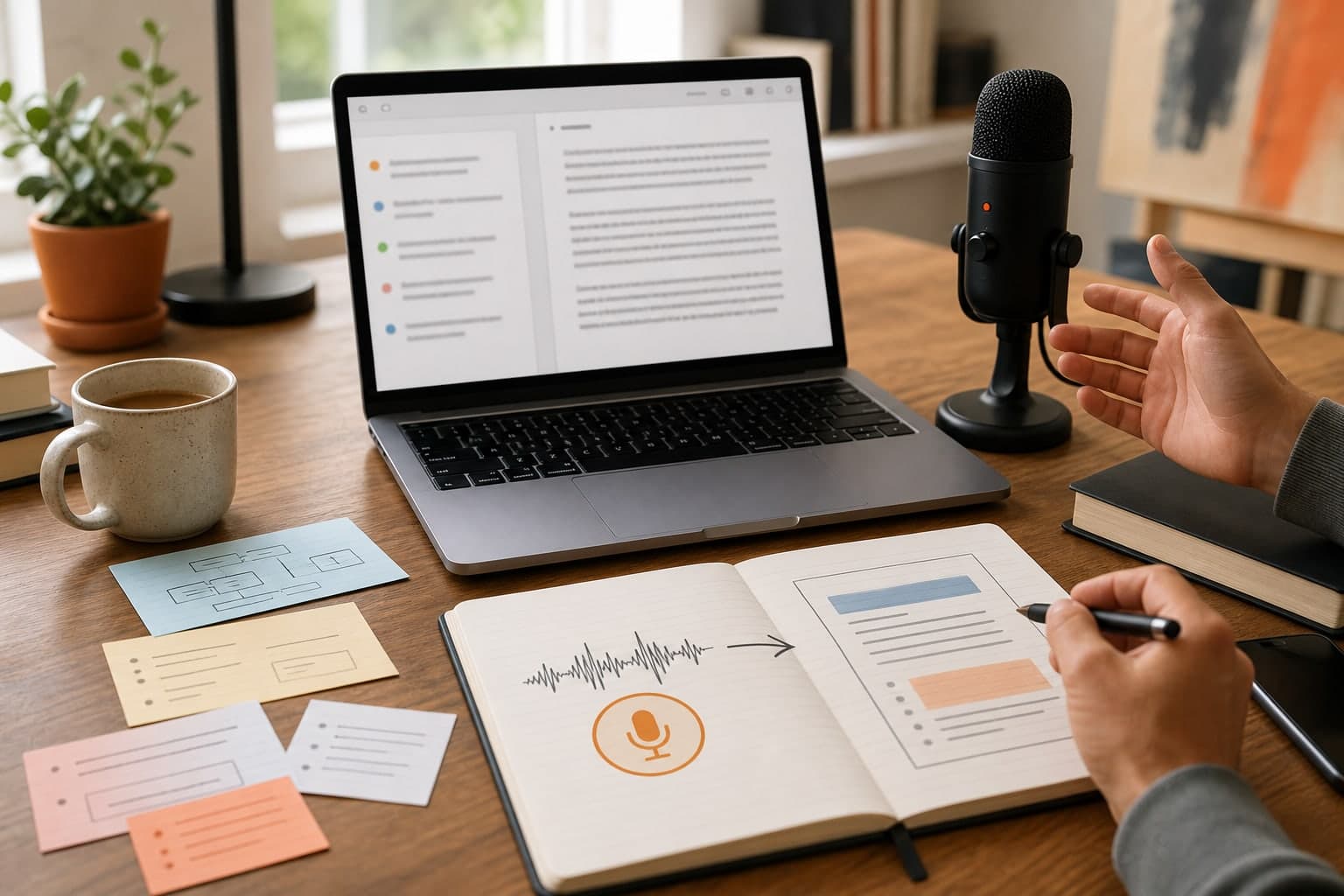
Voice notes are useful because they capture thought while it is still moving. They are messy for the same reason. The trick is to treat the recording as raw material, not as the draft itself.
Short answer
Record the messy idea first, then use the transcript to recover the raw material and the summary to find structure. Do not expect the first recording to become publishable prose automatically.
The best workflow is capture, structure, rewrite: say the idea naturally, turn it into an outline or memo shape, then edit in your own voice.
Record the messy version first
Do not try to speak like you are dictating a finished document. Say the idea, the examples, the objections, and the parts you are unsure about. The transcript gives you something concrete to shape later.
A local recorder such as Transcrio helps when ideas happen outside a dedicated writing app: after a call, during a browser demo, while reviewing notes, or when you want to talk through a proposal.
Ask the summary to produce structure
The first AI pass should not be the final prose. Ask for an outline, a list of claims, or a memo structure. That makes it easier to see what belongs in the draft and what was just thinking aloud.
For example, ask for: main point, supporting examples, risks, open questions, and suggested next draft. This works better than asking for a polished article immediately.
What you should have after processing
A processed voice note should give you enough structure to start editing, not a final document you trust without review.
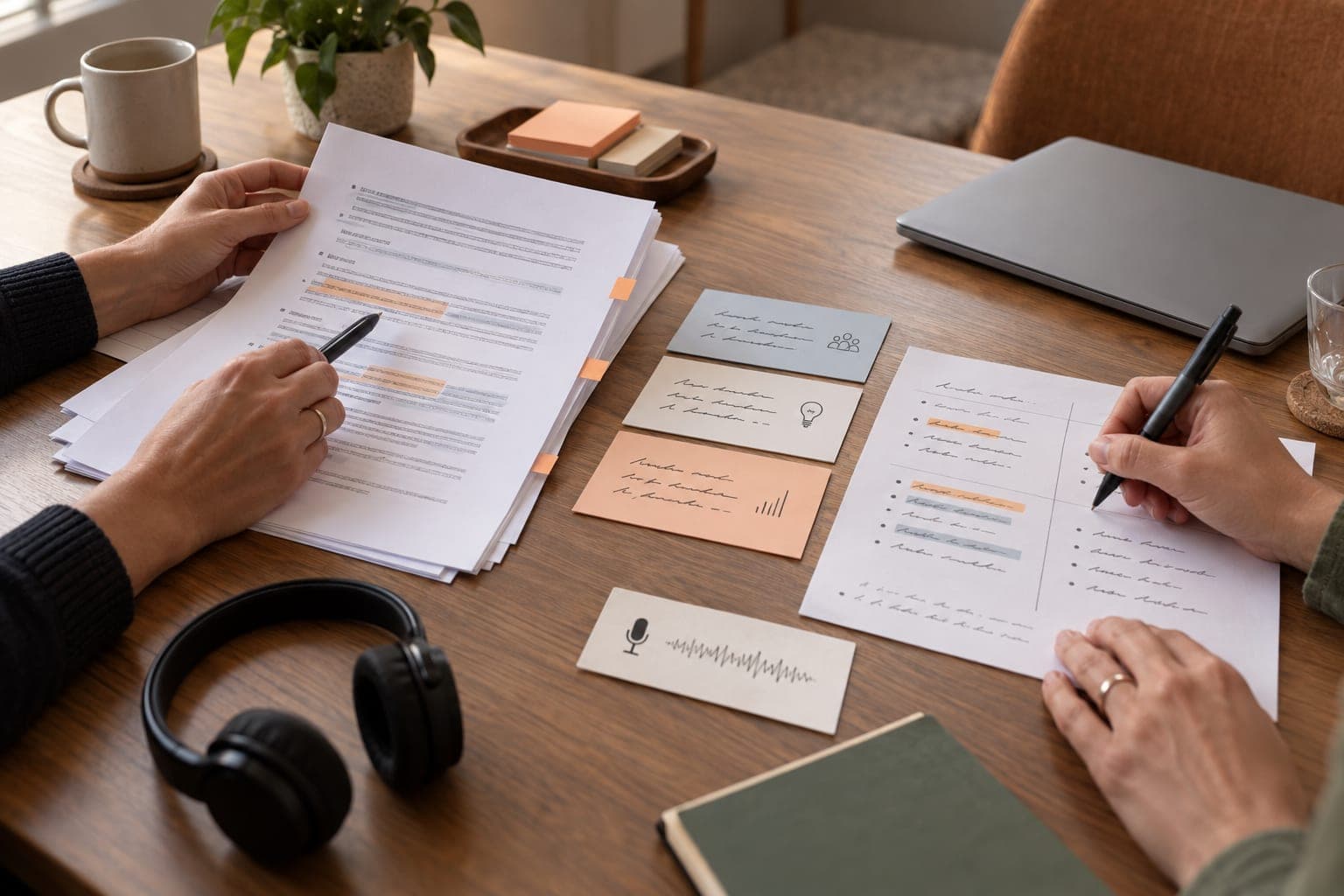
Use the transcript to recover exact phrases that sounded natural. Use the summary to organize the order. Then rewrite in your actual voice.
- A transcript of the raw spoken idea.
- A short outline or memo structure.
- A list of claims, examples, risks, and open questions.
- A next-draft prompt or working title.
Example: turn a rough idea into a draft
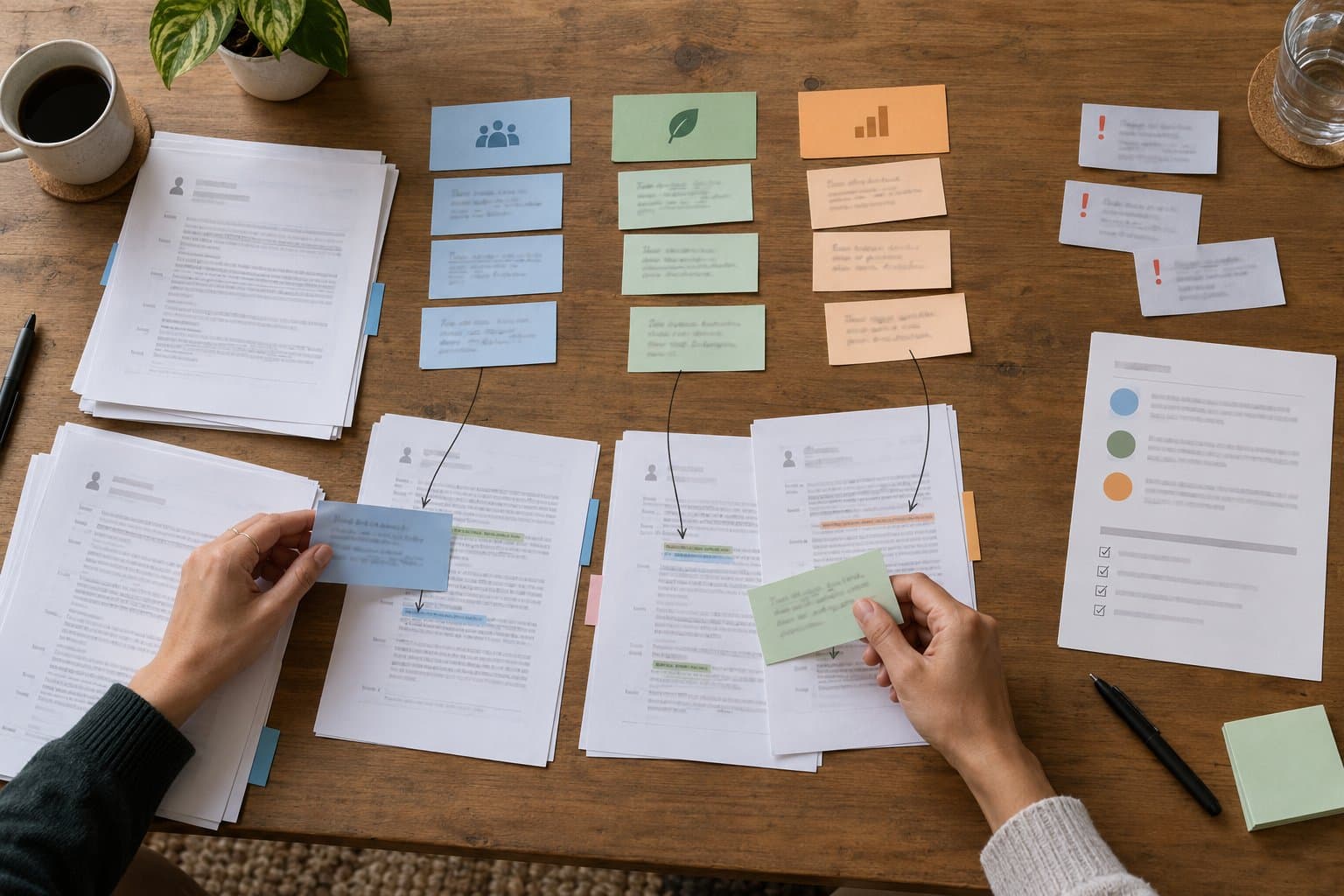
If you record a rough idea for a client proposal, ask the summary to separate the client problem, recommended approach, evidence, risks, and next step. That gives you a structure you can move into a document.
If you record thoughts after a lecture or meeting, ask for key points, examples, open questions, and a short follow-up plan. This is where voice notes beat blank-page writing: you are editing real material instead of inventing the first version from nothing.
- Keep one recording per idea when possible.
- Name the file with the topic before you forget the context.
- Save the summary beside the draft so you can revisit the original intent.
Use this for work that starts informal
Voice notes are strongest for material that begins as a thought: client follow-up, product ideas, support explanations, lecture notes, personal reminders, and first drafts of internal docs.
They are weaker when you already need exact formatting or citations. In those cases, record context first, then move into a structured editor.
Next steps
FAQ
Should I dictate punctuation and formatting?
Usually no. Capture the idea naturally, then use the transcript and summary to structure it. Dictation-style recording is useful only when you already know the final wording.
How long should a voice note be?
A few minutes is usually easier to process than one long recording. Split separate ideas into separate notes when possible.