What to keep after a meeting: audio, transcript, or summary

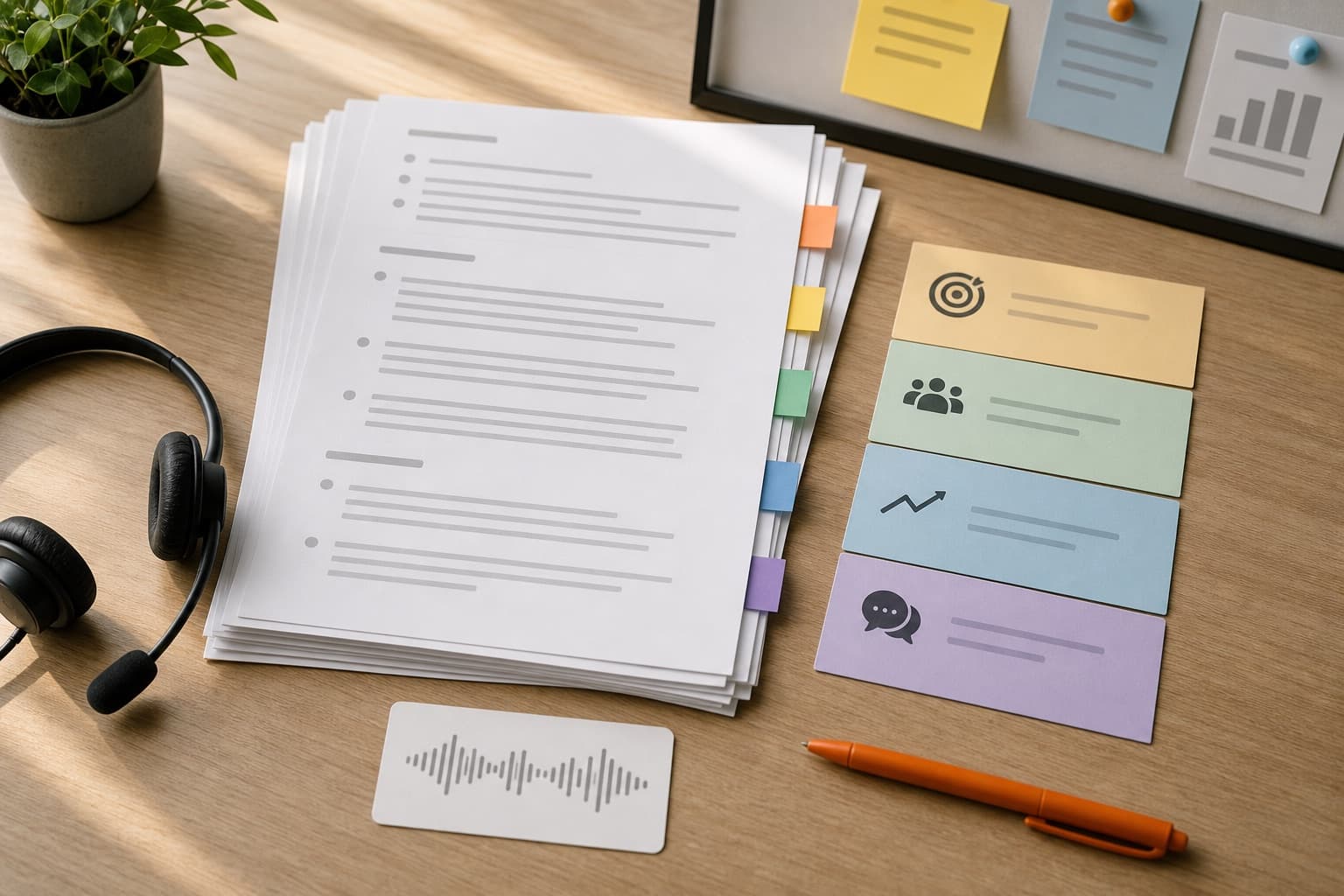
A recorded meeting can leave behind three different artifacts: the source audio, a transcript, and a summary. They solve different retrieval problems. Keeping all three forever is often unnecessary; keeping only one can make later review harder than it needs to be.
Short answer
For routine meetings, a summary is often enough. For client commitments, interviews, research, sensitive conversations, or anything where exact wording matters, keep the transcript and source audio at least long enough to verify the important details.
A simple default rule works well: open the summary first, search the transcript when you need evidence, and return to the audio when tone, wording, or context matters.
Use audio as the source of truth
Audio is the strongest record when tone, pauses, exact wording, or context matters. It is also the file you need if you ever want to regenerate a transcript with different settings later.
Keep audio for client commitments, interviews, legal or HR-adjacent conversations, high-value sales calls, research interviews, and any meeting where a quote may matter. If you are choosing between a live notepad and a recorder, the Granola comparison explains the difference in the files each workflow leaves behind.
- Keep audio when there were decisions, promises, prices, objections, or sensitive context.
- Delete audio sooner when the meeting was routine and your retention policy does not require it.
- Store audio where access is controlled, especially on shared or managed Macs.
Use transcripts for search and verification
A transcript is not always pleasant to read from top to bottom, but it is excellent for finding names, numbers, terms, and the exact moment a topic came up. It is the layer you search when the summary is too compressed.
If you use Transcrio, treat the transcript as the working layer between the source audio and the final summary. Review the parts that matter before you turn them into action items or customer-facing notes.
Use summaries for recall and action
A good summary should answer what happened, what changed, and what happens next. It should not try to preserve every sentence. That is what the transcript and audio are for.
For most recurring meetings, the summary is the artifact you will open first. It should include decisions, action items, blockers, and open questions in a stable format.
What your archive should contain
After you decide what to keep, the output should be easy to explain and easy to find. Do not save three disconnected files with vague names.
Store each meeting under a consistent name and keep only the artifacts that match the value of that conversation.
- Routine status meeting: summary only, unless a decision needs verification.
- Client call or interview: summary plus transcript, with audio retained for important details.
- Research or coaching session: transcript and audio, because quotes and tone may matter later.
- Sensitive meeting: the minimum useful artifacts, with stricter access and deletion rules.
Pick a retention rule before the archive grows
The worst archive is a pile of files with no deletion rule. Decide which categories deserve long-term storage and which can be cleaned up after the follow-up is done.
A simple rule is enough for the first release of a workflow: keep source audio for high-value or sensitive conversations, keep transcripts when search matters, and keep summaries for routine recall.
Next steps
FAQ
Is a summary enough for most meetings?
For routine internal meetings, often yes. For client work, interviews, or anything sensitive, keep the transcript or source audio long enough to verify important details.
Should I store meeting files in Transcrio as a long-term archive?
Transcrio is designed around local recording and processing workflows. Keep your long-term archive in the local or synced folder system you already trust.